French coffee culture is often romanticised, but in practice it is fairly straightforward. In cafés, coffee is short, dark, and functional. At home, it is slower, stronger, and made in larger quantities.
Across France, espresso is the default in cafés, particularly in cities such as Paris. Order un café and you will be served a single espresso without further questions. Milk drinks exist, but they are not the focus. Coffee is expected to be full-bodied, bitter enough to be satisfying, and consistent day to day.
Bean Choice in French Coffee

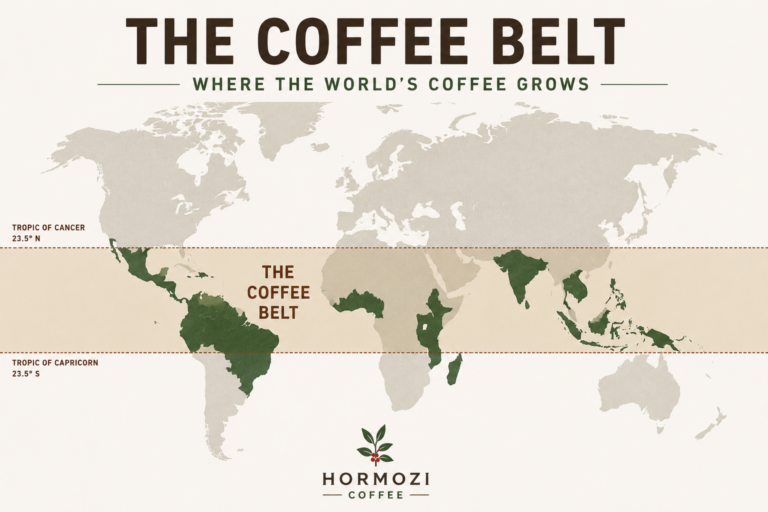
Traditional French coffee favours darker roasts with low acidity and a heavier mouthfeel. Historically, many blends relied on coffees from Java and Colombia, both of which hold up well at darker roast levels.
These coffees typically produce:
- Chocolate-led, earthy flavours
- A fuller body
- Minimal sharpness
This suits the French preference for espresso that works on its own and does not disappear when milk is added.
Our Continental Blend is a perfect choice for a French style coffee. Click here to try it now!
Coffee with Milk, the French Way

While café au lait is widely known, the more common café order is a noisette. This is an espresso with a small amount of milk, similar to a macchiato.
To make a noisette:
- Brew a standard espresso
- Add a small amount of lightly textured milk
The milk should soften the coffee without overpowering it. Because espresso is the base, darker roasts are usually preferred.
Milk-heavy coffees are most common at breakfast and are rarely ordered later in the day.
Café Crème

A café crème is the closest French equivalent to a cappuccino, though the preparation is less defined. It is typically consumed in the morning and often served in a larger cup or bowl.
It may be made by lengthening an espresso with hot water before adding milk, or in some cases by using a drip or filter-style coffee as the base. Heavy foam is not expected.
In France, this is considered a breakfast drink. Ordering one late in the day is unusual.
Coffee at Home: The Cafetière

Despite espresso dominating cafés, the cafetière (French press) remains the most common way to brew coffee at home.
The general preference is for:
- Darker roasted beans
- A coarser grind
- A stronger, oilier cup
French home coffee is made in volume and drunk slowly, often alongside food rather than on its own.
Do you want a cafetière / French press? Click here to buy now for under £8.00!
A Note on Style

French coffee culture values routine over variety. The same drink, ordered the same way, in the same place. It is not about customisation or experimentation.
That approach aligns closely with how we think about everyday coffee at Hormozi. Low acidity, dependable flavour, and blends that work consistently, whether taken black or with milk.
Everyday Coffee, Done Properly

French coffee is not designed to impress. It is designed to be reliable.
Strong, familiar, and easy to return to.
That simplicity is what gives it staying power.